Workshop Program
Half-Day Workshop | June 3, 2026 | Room 110 (AM Session, 8:50 AM - 12:30 PM)
Oral assignments are tentative.
| Session | Time |
|---|---|
| Opening Remarks | 8:50 AM - 9:00 AM |
|
Oral Session 1 (3 papers, 10 minutes each)
Papers in this session are tagged Oral · Session 1 in Accepted Papers below. |
9:00 AM - 9:30 AM |
|
Keynote 1 — BRIAR Program
Speakers: Dr. David Bolme & David Cornett, MS (Oak Ridge National Laboratory) Abstract & bio |
9:30 AM - 10:00 AM |
|
Keynote 2 — Tiny Objects, Big Questions: What Industry Needs from Future Vision Research
Speaker: Dr. Arnold Wiliem (Shield AI) · Sponsor Talk Abstract & bio |
10:00 AM - 10:30 AM |
|
Coffee Break & Poster Session
Posters located in Exhibit Hall A |
10:30 AM - 11:00 AM |
|
Oral Session 2 (2 papers, 10 minutes each)
Papers in this session are tagged Oral · Session 2 in Accepted Papers below. |
11:00 AM - 11:20 AM |
|
Keynote 3 — Advancing Miniature Aerial Robotics: Bio-Inspired Design and Mechanical Intelligence
Speaker: Dr. Pakpong Chirarattananon (University of Toronto) Abstract & bio |
11:20 AM - 11:50 AM |
|
Keynote 4 — Algorithm Development in IARPA BRIAR
Speaker: Prof. Xiaoming Liu (UNC Chapel Hill) Abstract & bio |
11:50 AM - 12:20 PM |
|
Awards & Closing
Best Paper Awards and Closing Remarks |
12:20 PM - 12:30 PM |
Oral Presentation Running Order
Presenters will be called in the order listed below.
Oral Session 1 — 9:00–9:30 AM (3 papers)
- Scale-Aware Vision-Language Adaptation for Extreme Far-Distance Video Person Re-identification
- ARIA-ReID: Altitude-Robust Identity Association for Aerial-to-Ground Person Re-Identification
- BReSK: Bootstrapped Contrastive Representation Learning for Skeleton-Based Action Understanding
Oral Session 2 — 11:00–11:20 AM (2 papers)
- Quantifying Operational Drivers of Multimodal Biometric Verification in Aerial Surveillance
- Compositional Preference Learning for Composed Person Retrieval
Accepted Papers
All papers are presented as posters. Oral session assignments are tentative.
Proceedings Track
- Scale-Aware Vision-Language Adaptation for Extreme Far-Distance Video Person Re-identification
- Enhancing Aerial Pedestrian Detection via High-Resolution P2 Feature Integration in YOLOv12
- SAFE-Net: Scale-Aware Feature Enhancement for Aerial Person Detection in Flood Disaster Imagery
- Quantifying Operational Drivers of Multimodal Biometric Verification in Aerial Surveillance
Non-Proceedings Track
- Multimodal LLMs for Context-Aware Human Activity Recognition in Aerial Surveillance
- ARIA-ReID: Altitude-Robust Identity Association for Aerial-to-Ground Person Re-Identification
- BReSK: Bootstrapped Contrastive Representation Learning for Skeleton-Based Action Understanding
- Compositional Preference Learning for Composed Person Retrieval
- Dual-Stream Multimodal Person Re-Identification Under Overhead Surveillance: RGB and Depth Perspectives
Awards
Sponsored by Shield AI
Quantifying Operational Drivers of Multimodal Biometric Verification in Aerial Surveillance
Alina Peluso, David S. Bolme, Gavin Glenn, Jairus Hines, Nicholas Burchfield, Andrew Duncan, Youngrock Yoon, Joel Robert Gray Brogan, Deniz Aykac, Ryan Shivers, Gio Pascascio, Leanne Thompson, Scott Dolvin, David Cornett
Invited Speakers
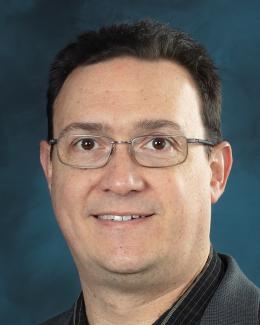




Keynote Details
Click a keynote to expand the abstract and speaker bio.
Abstract. The IARPA BRIAR program is advancing biometric recognition for aerial surveillance and long-range scenarios where traditional face-only approaches fail. Over six large-scale collection events across diverse U.S. environments, BRIAR captured more than 2,700 subjects, 300,000 videos, and 470,000 images using ground-based cameras at distances up to 1,000 meters and UAV platforms flown at altitudes up to 1,200 feet. This government dataset provides an unprecedented resource for algorithm development and evaluation. Research successes include multimodal fusion of face, body, and gait, enabling robust performance under severe pitch angles, turbulence, and occlusion. Independent evaluations show fusion approaches outperform face-only recognition, with measurable progress toward stringent mission focused applications. The talk will present insights from the ORNL testing and evaluation team related to data collection, algorithmic advances, and evaluation results, highlighting key program achievements in real-world long-range biometrics and aerial surveillance missions.
Bio. Dr. David Bolme and David Cornett co-lead the testing and evaluation for the IARPA BRIAR program at Oak Ridge National Laboratory (ORNL) and co-founded the Identity Science Program (IDS), which supports over 35 researchers annually in biometric and identity research for U.S. national security priorities. Dr. Bolme previously served as Group Leader for the Human Analysis and Biometrics Research Group and is a founding member of ORNL's Center for AI Security Research (CAISER). His research focuses on biometric evaluation, advanced computer vision prototypes, and multimodal AI systems, with contributions to national biometric evaluations at NIST and real-time computer vision and tracking technologies. Dr. Bolme earned his B.S., M.S., and Ph.D. in Computer Science from Colorado State University and joined ORNL in 2012. David Cornett's research focuses on biometrics for national security applications, human-inspired AI systems, edge deployment of AI, and AI for psychophysical applications. He earned his B.S. in Computer Science and B.S. in Computer Engineering from the University of Kentucky, his M.S. in Computer Engineering from the University of Tennessee, and is completing his Ph.D. in Computer Science at the same institution.
Abstract. Tiny and small object detection remains a major challenge in computer vision, particularly in aerial imagery where targets may occupy only a few pixels, appear in cluttered scenes, and be observed under difficult viewing conditions. Yet this capability is increasingly important for aviation applications that require reliable perception over wide areas, long ranges, and constrained onboard systems. This keynote will examine tiny object detection through an industry lens, highlighting the key challenges that must be addressed to move from benchmark progress to operational impact. The talk will also look ahead to the future of aerial image analysis from aerial platforms and discuss the new challenges that may emerge as this technological landscape evolves. By connecting today's technical challenges with tomorrow's industry needs, the talk aims to help the community anticipate and tackle the next generation of problems in aerial perception.
Bio. Dr Arnold Wiliem is Senior Principal Engineer in Deep Learning/AI at Shield AI, a senior technical leadership role equivalent to Senior Director, where he leads a deep learning group within the Hivemind Vision division. He has extensive experience in computer vision, deep learning, and applied AI, with a particular focus on developing and deploying AI-enabled perception and autonomy capabilities for aviation applications in the defence industry. He is also an Adjunct Associate Professor at Queensland University of Technology, where he contributes to mentoring and developing future experts and leaders in AI, robotics, and autonomous systems. Dr Wiliem's career spans industry deployment, academic research leadership, digital pathology, biometrics, autonomous systems, research grant management, and higher-degree research supervision. He earned his Ph.D. from Queensland University of Technology in 2010.
Abstract. Advancing small aerial robots involves overcoming challenges in efficiency, versatility, and autonomy posed by miniaturization and resource constraints. My research embraces bio-inspired design principles and mechanical intelligence to push boundaries in what's achievable. This talk will explore how bio-inspiration and a minimalist approach have led to significant advancements. We will discuss our recent work on the Hopcopter, a novel hybrid hopping-flying robot. Our design showcases how passive elements can simplify actuation and improve overall agility, demonstrating how compliant mechanisms and energy recuperation can radically enhance performance of robotic locomotion systems. Together, these biologically-motivated innovations enable miniature aerial vehicles to take on increasingly complex real-world tasks with limited payload capacity and power.
Bio. Pakpong Chirarattananon is currently an Associate Professor in the Department of Mechanical and Industrial Engineering at the University of Toronto. Prior to joining UofT, he was an Associate Professor at the City University of Hong Kong. He received his Ph.D. in Engineering Sciences from Harvard University and his B.A. in Natural Sciences from the University of Cambridge. His research is primarily centered on biologically inspired robotic systems, micro aerial vehicles, and hybrid locomotion. His contributions include highly efficient revolving-wing drones, flapping-wing robots, and multimodal multirotors, with publications in prestigious journals such as Science, Nature, and Science Robotics. His contributions to the field have been recognized with several awards, including the 2021 IEEE Transactions on Robotics King-Sun Fu Memorial Best Paper Award.
Abstract. Human recognition aims to recognize humans given an imagery or video. This is one of the most fundamental tasks that computer vision researchers are striving to solve in the past decades. While human recognition in ideal settings has been well studied, recognizing humans at a far distance is still a very challenging problem. The IARPA sponsored BRIAR program is a 4+ year effort to advance the state of art in this challenging setting. This talk will share the progress we made and the lessons we learned during the course of working on this project.
Bio. Dr. Xiaoming Liu is Jacqueline Maria Hagan Distinguished Professor at the Department of Computer Science of University of North Carolina at Chapel Hill starting 2026. He was MSU Foundation Professor, and Anil and Nandita Jain Endowed Professor at Michigan State University (MSU). He received a Ph.D. degree from Carnegie Mellon University in 2004. Before joining MSU in 2012 he was a research scientist at General Electric (GE) Global Research. He works on computer vision, machine learning, and biometrics especially on face related analysis and 3D vision. He is an Associate Editor of IEEE T-PAMI. He has authored more than 200 scientific publications, and has filed 35 U.S. patents. His work has been cited over 35000 times, with an H-index of 87. He is a fellow of The Institute of Electrical and Electronics Engineers (IEEE) and International Association for Pattern Recognition (IAPR).
Organizing Committee





Venue
Colorado Convention Center
700 14th St, Denver, CO 80202, USA
AERO-HPR 2026 will be held at the Colorado Convention Center in Denver, Colorado, in conjunction with CVPR 2026.
June 3, 2026 (Half-day AM workshop)
Room 110
8:50 AM - 12:30 PM (MDT)
Sponsors